

The question “Is XRP the next Bitcoin?” has sparked considerable debate within the cryptocurrency community. While Bitcoin remains the undisputed market leader and store of value, XRP (Ripple’s native token) has carved out a distinct niche in the digital asset landscape. Understanding the differences, similarities, and potential trajectories of these two cryptocurrencies requires examining their fundamental purposes, technological foundations, and market dynamics.
XRP and Bitcoin serve fundamentally different functions within the broader cryptocurrency ecosystem. Bitcoin was designed as a peer-to-peer electronic cash system and digital store of value, while XRP was created to facilitate fast, low-cost international payments and remittances. This distinction is crucial when evaluating whether XRP could achieve Bitcoin’s market dominance and cultural significance. The answer isn’t simply yes or no—it depends on how we define “the next Bitcoin” and what metrics we use to measure success.
Understanding Bitcoin’s Unique Position
Bitcoin occupies a position in the cryptocurrency market that is extraordinarily difficult to replicate. As the first blockchain-based cryptocurrency, Bitcoin benefits from first-mover advantage, network effects, and widespread recognition. When Satoshi Nakamoto released Bitcoin in 2009, it solved the double-spending problem without requiring a trusted intermediary—a breakthrough that fundamentally changed how we think about digital currency and value transfer.
The Bitcoin price prediction community often references the cryptocurrency’s scarcity model, with only 21 million coins ever able to be mined. This hardcoded scarcity, combined with Bitcoin’s immutability and decentralized consensus mechanism, has positioned it as digital gold—a store of value and hedge against inflation. Central banks and institutional investors now hold Bitcoin as a treasury asset, a status that took over a decade to achieve.
Bitcoin’s dominance extends beyond market capitalization. It commands approximately 40-50% of the total cryptocurrency market cap during bull cycles and maintains the highest brand recognition globally. This psychological dominance—the “safe choice” in crypto—provides Bitcoin with resilience that newer cryptocurrencies struggle to match. Understanding Bitcoin forecast 2025 trends helps contextualize where the broader market is heading.
XRP’s Purpose and Technology
XRP was created by Ripple Labs in 2012 with a fundamentally different mission than Bitcoin. Rather than functioning as a peer-to-peer cash system, XRP serves as a bridge currency for financial institutions and payment networks. The token enables fast settlement of international transfers, with transactions typically completing in 3-5 seconds regardless of global location.
Ripple’s consensus mechanism differs significantly from Bitcoin’s proof-of-work system. XRP Ledger uses a unique consensus protocol called the Ripple Protocol Consensus Algorithm (RPCA), which relies on a network of trusted validators rather than miners competing to solve computational puzzles. This architectural choice makes XRP more energy-efficient than Bitcoin but introduces different trade-offs regarding decentralization.
The XRP Ledger can process thousands of transactions per second, compared to Bitcoin’s seven transactions per second. This scalability advantage makes XRP theoretically superior for payment processing and remittances. However, scalability isn’t the only factor determining cryptocurrency success. Bitcoin’s slower transaction speed is an intentional design choice prioritizing security and decentralization over throughput.
XRP’s use case focuses on institutional adoption, particularly among banks and money transmitters. Ripple has partnerships with numerous financial institutions exploring RippleNet and the On-Demand Liquidity (ODL) service. This institutional focus contrasts sharply with Bitcoin’s peer-to-peer philosophy and retail-driven adoption.
Market Capitalization and Adoption
Comparing market capitalizations provides one lens for evaluating XRP versus Bitcoin. Bitcoin’s market cap typically ranges from $400 billion to over $1 trillion during bull markets, while XRP’s market cap has reached approximately $150 billion at its peak. This substantial difference reflects Bitcoin’s entrenched position and broader adoption across retail and institutional investors.
XRP’s circulating supply presents another important consideration. While Bitcoin has a capped supply of 21 million coins, XRP has a circulating supply of approximately 52 billion tokens with a maximum supply of 100 billion. This larger token supply means that achieving Bitcoin-equivalent market capitalization would require significantly higher per-token valuations. How to invest in cryptocurrency decisions often hinge on understanding these supply dynamics.
Adoption metrics tell a complex story. Bitcoin has achieved mainstream adoption with payment processors, investment platforms, and retail merchants accepting it globally. XRP’s adoption remains primarily concentrated within Ripple’s ecosystem and partner financial institutions. While this institutional focus provides legitimacy, it hasn’t translated into the consumer-level adoption that Bitcoin enjoys.
The risk tolerance required to invest in XRP differs from Bitcoin. Bitcoin’s established position as a store of value appeals to risk-averse investors, while XRP’s speculative potential attracts traders betting on institutional payment adoption acceleration.
Regulatory Challenges and Legal Status
One of the most significant factors affecting XRP’s growth potential is its regulatory status. In December 2020, the U.S. Securities and Exchange Commission (SEC) filed a lawsuit against Ripple Labs, alleging that XRP was sold as an unregistered security. This legal battle created substantial uncertainty for XRP investors and exchanges, with several platforms delisting XRP to avoid regulatory exposure.
The SEC case represents a critical inflection point for XRP’s future. A determination that XRP qualifies as a security would require Ripple to register as a securities issuer and potentially restrict XRP trading. Conversely, a ruling that XRP is a commodity would provide regulatory clarity and potentially unlock institutional adoption. This legal uncertainty has suppressed XRP’s growth compared to other major cryptocurrencies.
Bitcoin, by contrast, has achieved clearer regulatory status in most jurisdictions. The U.S. Commodity Futures Trading Commission classifies Bitcoin as a commodity, and numerous countries have established regulatory frameworks recognizing Bitcoin’s legal status. This regulatory clarity provides Bitcoin with a competitive advantage in attracting institutional capital and retail investors.
International regulatory approaches vary significantly. Some jurisdictions embrace cryptocurrencies while others restrict or ban them. XRP’s institutional focus makes it particularly sensitive to regulatory developments affecting financial institutions and remittance services. Understanding these regulatory dynamics is essential for assessing XRP’s long-term viability.
Technology Comparison
When comparing the underlying technologies, Bitcoin and XRP represent different philosophical approaches to blockchain design. Bitcoin prioritizes decentralization and security through proof-of-work mining, where thousands of independent miners secure the network. This distributed consensus mechanism makes Bitcoin extraordinarily difficult to attack or censor, though it requires substantial computational resources.
XRP Ledger’s validator-based consensus mechanism is more efficient but concentrates more authority among a smaller number of validators. Ripple currently operates a significant portion of the validators, though the network is gradually becoming more decentralized. This centralization trade-off enables faster transaction processing but introduces counterparty risk that Bitcoin avoids.
Smart contract capabilities present another distinction. Bitcoin’s scripting language is intentionally limited, prioritizing security over functionality. Ethereum pioneered smart contract platforms, and XRP Ledger has recently introduced smart contract functionality through the Ripple EVM-compatible sidechain. Bitcoin’s approach reflects its singular focus on value transfer rather than general-purpose computation.
Interoperability represents an area where XRP theoretically excels. The Interledger Protocol (ILP) enables XRP to bridge different payment systems and ledgers, facilitating cross-chain transactions. Bitcoin’s UTXO model and proof-of-work consensus make cross-chain bridges more complex, though solutions like wrapped Bitcoin and sidechains are being developed.
The Bitcoin rainbow chart provides historical perspective on Bitcoin’s price cycles and valuation levels. Similar analytical frameworks for XRP reveal distinct price patterns influenced by regulatory news, partnership announcements, and broader market sentiment.
Investment Potential and Risk Factors
Evaluating XRP as an investment requires careful consideration of multiple risk factors. The regulatory uncertainty surrounding XRP’s classification as a security or commodity creates volatility and limits institutional adoption. This regulatory overhang could persist for years, affecting XRP’s price trajectory and utility.
XRP’s correlation with Bitcoin remains high, though it sometimes exhibits independent price movements driven by company-specific news. During bear market vs bull market cycles, XRP typically experiences larger percentage declines than Bitcoin due to its smaller market cap and higher volatility.
Ripple’s centralized control over a significant portion of XRP’s supply presents another consideration. Ripple holds substantial XRP reserves and has been gradually releasing them to fund operations and partnerships. This token release schedule affects XRP’s supply dynamics and could pressure prices if releases accelerate or if market sentiment turns negative.
The payment remittance market, while valuable, faces competition from multiple sources. Traditional money transfer services, other cryptocurrencies, and emerging fintech companies all compete for market share in international payments. XRP’s success depends on achieving adoption rates that justify its market valuation.
Conversely, XRP offers intriguing potential for investors believing in institutional adoption of blockchain-based payment systems. If banks and financial institutions increasingly utilize RippleNet and ODL services, XRP demand could increase substantially. The cryptocurrency’s technology advantages for payment processing are genuine, even if they haven’t translated into widespread adoption yet.
Expert Perspectives on Future Growth
Cryptocurrency experts and analysts hold divergent views on XRP’s future relative to Bitcoin. Bullish analysts point to institutional partnerships, technological advantages for payments, and the massive addressable market in international remittances. They argue that as regulatory clarity emerges and institutional adoption accelerates, XRP could experience explosive growth.
Bearish perspectives emphasize regulatory risks, Ripple’s centralized control, and Bitcoin’s entrenched position. Critics note that despite over a decade of development, XRP hasn’t achieved the adoption levels that would justify its market capitalization. They argue that Bitcoin’s network effects and brand recognition make it an unlikely candidate for replacement as the leading cryptocurrency.
Industry analysts from CoinDesk and other major cryptocurrency research firms note that XRP and Bitcoin serve different purposes and may not be directly comparable. Rather than XRP replacing Bitcoin, both could coexist and thrive in different niches—Bitcoin as a store of value and Bitcoin network as settlement layer, XRP as a payment bridge currency.
The concept of “the next Bitcoin” itself may be flawed. Bitcoin’s dominance stems from its first-mover advantage, network effects, and unique position in cryptocurrency history. Rather than seeking the next Bitcoin, investors might better focus on identifying cryptocurrencies that excel in their specific use cases. For XRP, that use case is efficient institutional payment settlement.
Institutional investors increasingly diversify cryptocurrency holdings rather than concentrating exclusively on Bitcoin. This diversification benefits XRP if adoption accelerates, but also means XRP success doesn’t require Bitcoin’s dominance levels. XRP could become highly successful in payment settlement while Bitcoin maintains its store-of-value position.
Looking at Bitcoin forecast 2025 predictions alongside XRP outlook reveals different growth catalysts. Bitcoin’s price drivers include macroeconomic factors, institutional adoption rates, and regulatory clarity. XRP’s growth depends more heavily on specific partnership announcements, regulatory decisions, and payment volume metrics.
The halving cycles affecting Bitcoin’s supply don’t apply to XRP, removing that price catalyst. However, XRP’s token release schedule and potential changes to Ripple’s operations could create similar supply-related price movements. Monitoring Ripple’s official announcements and ecosystem developments becomes crucial for XRP investors.
Expert consensus suggests that while XRP could experience significant appreciation, achieving Bitcoin-equivalent market dominance is unlikely given different use cases and supply dynamics. However, XRP could become the dominant cryptocurrency for institutional payments, a valuable position even if it doesn’t match Bitcoin’s overall market cap.

The long-term success of both Bitcoin and XRP likely depends on regulatory frameworks that provide clarity while maintaining the cryptocurrencies’ core value propositions. As governments worldwide develop cryptocurrency regulations, clarity around whether XRP qualifies as a security or commodity will significantly impact its trajectory.
Technological developments also matter considerably. Bitcoin’s Lightning Network enables faster, cheaper transactions, potentially addressing scalability criticisms. If Lightning Network adoption accelerates, Bitcoin’s payment disadvantages diminish. Meanwhile, XRP’s smart contract capabilities and Ripple’s continued infrastructure development could unlock new use cases beyond payments.
The competitive landscape continues evolving with numerous cryptocurrencies targeting payment efficiency and institutional adoption. Stablecoins like USDC and USDT, central bank digital currencies (CBDCs), and alternative payment-focused cryptocurrencies all compete for market share. XRP’s differentiation in this crowded market will determine whether it achieves significant adoption.
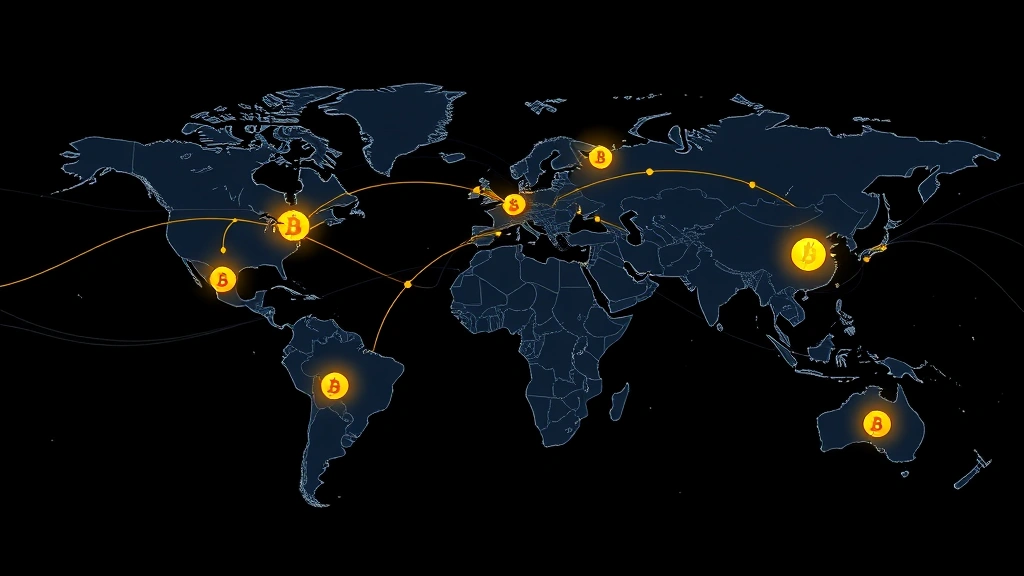
For investors considering XRP versus Bitcoin allocation, risk tolerance and investment timeline matter significantly. Bitcoin’s longer track record and established position make it a lower-risk holding for long-term investors. XRP’s higher volatility and regulatory uncertainty make it more suitable for investors with higher risk tolerance and shorter time horizons.
Diversification across both cryptocurrencies, combined with understanding their distinct purposes and risk factors, provides a balanced approach. Rather than viewing XRP and Bitcoin as competitors for the same market, recognizing their complementary roles in a broader cryptocurrency ecosystem may prove more productive for investment decision-making.
FAQ
Can XRP reach Bitcoin’s market cap?
Mathematically possible, XRP would need to reach approximately $20-30 per token to match Bitcoin’s typical market cap, depending on Bitcoin’s price. However, XRP’s larger maximum supply means per-token prices would need to be lower than Bitcoin’s for equivalent market caps. More importantly, achieving Bitcoin’s market dominance would require fundamental shifts in how markets value cryptocurrencies and their use cases.
Is XRP a good investment compared to Bitcoin?
This depends on individual investment goals and risk tolerance. Bitcoin offers established store-of-value characteristics with lower volatility relative to alternative cryptocurrencies. XRP offers higher potential returns but with greater regulatory and execution risks. Most portfolio advisors recommend including both rather than choosing one exclusively.
What’s the main difference between XRP and Bitcoin?
Bitcoin functions as a peer-to-peer electronic cash system and store of value using proof-of-work consensus. XRP serves as a bridge currency for institutional payment settlement using validator-based consensus. Their different purposes mean they’re not direct competitors but rather serve distinct market segments.
Will XRP’s SEC lawsuit affect its price?
The SEC lawsuit’s outcome will significantly impact XRP’s regulatory status and adoption potential. A favorable ruling could unlock institutional adoption and increase prices substantially. An unfavorable ruling could severely restrict XRP trading and utility. Regulatory clarity, regardless of direction, would likely reduce XRP’s volatility premium compared to Bitcoin.
Should I invest in XRP or Bitcoin?
Consider your risk tolerance, investment timeline, and portfolio goals. Bitcoin suits conservative investors seeking a cryptocurrency store of value. XRP appeals to investors believing in institutional payment adoption and willing to accept higher volatility. Diversification across both, combined with understanding each cryptocurrency’s fundamentals, provides a balanced approach. Always research how to invest in cryptocurrency thoroughly before committing capital.
What regulatory bodies oversee XRP and Bitcoin?
In the United States, the SEC and CFTC oversee cryptocurrency regulations. The SEC focuses on securities classification, while the CFTC regulates cryptocurrency derivatives. International regulatory bodies like the Financial Action Task Force (FATF) develop global cryptocurrency standards. Individual countries maintain their own regulatory frameworks.
How do Bitcoin and XRP transaction speeds compare?
Bitcoin processes approximately 7 transactions per second, with 10-minute block times. XRP Ledger processes thousands of transactions per second with 3-5 second settlement. However, Bitcoin’s Lightning Network enables faster payments, and Bitcoin’s slower speed reflects intentional design choices prioritizing security and decentralization.
What’s XRP’s utility beyond payments?
XRP’s utility traditionally focused on payments and remittances through RippleNet. Recently, XRP Ledger introduced smart contract capabilities, potentially enabling broader applications. However, XRP’s primary value proposition remains payment settlement rather than general-purpose smart contract execution.
Can both Bitcoin and XRP succeed long-term?
Yes, both can succeed in their respective niches. Bitcoin’s store-of-value and settlement-layer roles differ from XRP’s payment-bridge function. Rather than one replacing the other, they could coexist with Bitcoin as digital gold and XRP as institutional payment infrastructure. The cryptocurrency market is large enough to support multiple successful cryptocurrencies with different purposes.
Where can I track XRP and Bitcoin prices?
Major cryptocurrency exchanges like Coinbase, Kraken, and Binance display real-time prices. Blockchain explorers like Blockchain.com provide detailed transaction and network information. Financial platforms including Bloomberg, Reuters, and Yahoo Finance offer cryptocurrency price tracking alongside traditional assets.