Is Tarkov Bitcoin Profitable? Gamer Insights on In-Game Cryptocurrency
Escape from Tarkov has revolutionized how gamers think about virtual economies, introducing a sophisticated in-game bitcoin system that mirrors real-world cryptocurrency principles. Players worldwide are asking: can you actually profit from Tarkov bitcoin? The answer is more nuanced than a simple yes or no, requiring careful analysis of farming mechanics, market dynamics, and investment strategies within this brutal tactical shooter.
Understanding Tarkov bitcoin profitability means examining both the technical aspects of cryptocurrency farming within the game and the broader economic implications for your gameplay. Whether you’re a seasoned player optimizing your hideout or a newcomer exploring passive income streams, this comprehensive guide will illuminate the path to maximizing your in-game wealth through bitcoin mining.
What is Tarkov Bitcoin and How Does It Work
Tarkov bitcoin represents one of the most valuable virtual assets in Escape from Tarkov, functioning as both a currency and an investment vehicle within the game’s economy. Unlike real cryptocurrency, which you can learn more about by exploring what is cryptocurrency, Tarkov bitcoin operates under simplified rules designed to reward strategic planning and long-term commitment.
The in-game bitcoin system was introduced to provide players with a passive income stream through hideout upgrades. Players can install graphics processing units (GPUs) and bitcoin miners in their hideout’s intelligence center and bitcoin farm, allowing them to generate virtual bitcoins over time without active gameplay. Each GPU installed increases your mining power, and the farm automatically generates bitcoins based on the number of GPUs you have running.
The mechanics are straightforward: you purchase GPUs from traders or find them in raid, install them in your bitcoin farm, and watch as they generate income while you’re offline or engaged in other activities. This passive income model has made bitcoin farming one of the most popular hideout investments, with experienced players often running 25+ GPUs simultaneously. The beauty of this system lies in its predictability—unlike raid loot which varies wildly, bitcoin generation follows consistent formulas that experienced players can calculate precisely.
Bitcoin Mining Setup and Requirements
Setting up a profitable bitcoin mining operation in Tarkov requires careful planning and substantial initial investment. Before you begin, you’ll need to understand the how to invest in cryptocurrency principles that apply to in-game economies, as the core concepts of risk and reward remain constant.
Essential Requirements:
- Bitcoin Farm level 1 (unlocked through hideout progression)
- Graphics Processing Units (GPUs) to install
- Sufficient hideout power to run your mining operation
- Initial capital to purchase GPUs from traders or the flea market
- Patience and commitment to long-term passive income generation
The bitcoin farm can be upgraded through five levels, with each level increasing your maximum GPU slots. Level 1 allows 10 GPUs, level 2 adds 10 more, and subsequent upgrades continue expanding capacity. However, each upgrade requires significant rubles and crafting time, so most players prioritize reaching level 3 (30 GPUs) before considering further expansions.
GPU acquisition represents your primary challenge. RTX 2060 Super, RTX 3060 Ti, and GTX 1080 Ti are the most profitable options, each with different generation rates. Finding these components requires consistent raiding, trading with other players, or purchasing from the flea market. The initial investment—often ranging from 5 to 15 million rubles depending on GPU prices—can seem daunting, but understanding what is portfolio diversification helps justify allocating resources to this long-term investment.
Power management is critical. Your hideout has limited power capacity, and bitcoin farming consumes significant electricity. Upgrading your power generator and fuel production ensures your mining operation runs continuously without interruption. Many players install solar panels and upgrade their power infrastructure specifically to support expanded GPU farms.
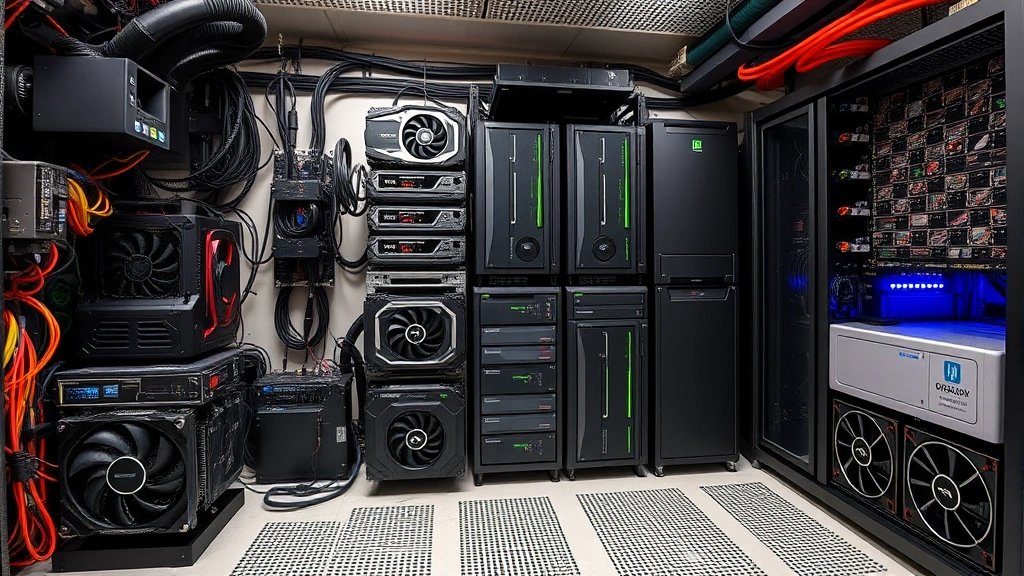
” alt=”Detailed cryptocurrency mining hardware setup with GPU cards, cooling systems, and power distribution units in professional data center environment”>
Profitability Analysis and ROI Calculations
Determining whether Tarkov bitcoin is profitable requires calculating your return on investment (ROI) based on current market conditions and your specific setup. The profitability equation considers GPU costs, bitcoin generation rates, and the current in-game bitcoin price.
Basic Profitability Formula:
- GPU Cost: 300,000 rubles (average flea market price)
- Bitcoin Generation: 1 bitcoin per GPU every 48-50 hours
- Bitcoin Value: 800,000-900,000 rubles (varies by server and patch)
- Break-even Point: Approximately 16-18 days per GPU
This means that after roughly two to three weeks, each GPU generates profit beyond its initial cost. With 25 GPUs running simultaneously, you’re generating approximately one bitcoin every 2 hours, translating to 12 bitcoins daily. At 850,000 rubles per bitcoin, that’s over 10 million rubles in daily passive income once your farm reaches maturity.
However, profitability varies significantly based on several factors. Bitcoin prices fluctuate with server resets and economy changes. GPU availability affects initial investment costs—during shortage periods, GPUs cost substantially more, extending your break-even timeline. Additionally, power consumption costs, hideout upgrades, and maintenance all factor into true profitability calculations.
Understanding what is risk tolerance becomes relevant when considering your investment strategy. Some players prioritize immediate returns by investing in fewer, higher-quality GPUs, while others spread capital across multiple mid-range components. Your risk tolerance determines whether you’re comfortable with large upfront costs for faster returns or prefer gradual, steady accumulation.
Real-world cryptocurrency investors face similar decisions, which is why exploring how to set investment goals proves valuable. Setting clear targets for your Tarkov bitcoin farm—whether you aim for 15, 25, or 50 GPUs—helps maintain focus and prevents impulsive spending decisions.
Comparing Bitcoin to Other Hideout Investments
While bitcoin farming dominates hideout profitability discussions, alternative investments deserve consideration. The intelligence center, scav case, and solar power upgrades each offer unique advantages and profitability profiles.
Intelligence Center vs. Bitcoin Farm:
The intelligence center generates intel items and cash occasionally, but its returns pale compared to bitcoin farming. Most experienced players prioritize bitcoin farm expansion before significant intelligence center upgrades. However, the intelligence center generates passive income with virtually zero power consumption, making it attractive for players with power limitations.
Scav Case Investment:
The scav case requires upfront payment and generates returns through random loot. While potentially profitable, returns are unpredictable and often lower than bitcoin farming’s consistent income. The scav case appeals to players seeking variety rather than pure profitability.
Solar Power and Generator Upgrades:
These investments don’t directly generate income but enable larger mining operations by providing power infrastructure. Consider them essential investments that facilitate bitcoin farming rather than standalone profit sources.
Comparing these options reveals that bitcoin farming consistently outperforms alternatives in terms of guaranteed returns and profitability per ruble invested. This is why understanding pros and cons of cryptocurrency systems proves valuable—even in-game economies reward strategic thinking and long-term planning over gambling on uncertain outcomes.
Market Dynamics and Trading Strategy
Tarkov’s economy operates similarly to real cryptocurrency markets, with supply and demand dynamics affecting prices. Understanding these market forces helps you optimize your bitcoin trading strategy and maximize profits.
Bitcoin prices fluctuate based on several factors:
- Server Resets: Wipe events reset the economy, often causing price volatility
- Patch Changes: Balance updates affecting farming efficiency alter supply-demand equilibrium
- Player Population: Increased players boost demand for high-value items, affecting bitcoin prices
- Loot Availability: Changes to GPU spawn rates impact mining profitability and market prices
- Flea Market Dynamics: Player trading activity creates price fluctuations independent of game mechanics
Savvy players monitor these trends and adjust their strategies accordingly. During periods of high bitcoin prices, some players prioritize selling generated bitcoins immediately. During low-price periods, they might hold bitcoins or invest profits into additional GPU purchases for future expansion.
The flea market serves as your primary trading venue, functioning much like real cryptocurrency exchanges. You can list bitcoins for sale at competitive prices, undercutting competitors to ensure quick sales or holding out for premium prices during shortages. Successful Tarkov traders combine market knowledge with patience, timing their sales strategically.
Maximizing Your Tarkov Bitcoin Returns
Beyond basic mining setup, several strategies dramatically improve your bitcoin farming profitability:
GPU Selection Strategy:
Not all GPUs are created equal. RTX 3060 Ti cards generate bitcoins fastest, but their high cost means you’ll invest more upfront. GTX 1080 Ti and RTX 2060 Super cards offer better cost-efficiency, allowing faster farm expansion. Calculate your specific break-even points and choose accordingly.
Progressive Expansion:
Rather than purchasing all GPUs simultaneously, expand gradually. This approach distributes costs across multiple raids, reduces financial risk, and allows you to adjust strategy based on market conditions. Start with 10-15 GPUs, observe profitability, then expand methodically toward your target capacity.
Power Optimization:
Upgrade your power infrastructure strategically. Solar panels and fuel production systems reduce operational costs, improving net profitability. Players running efficient power systems see significantly higher returns than those relying on expensive fuel purchases.
Reinvestment Strategy:
Rather than spending all bitcoin farm profits on weapons and gear, reinvest a portion into farm expansion. This compounds your returns—doubling your GPU count doubles your income, accelerating future growth exponentially.
Timing Your Sales:
Monitor bitcoin prices across your server’s flea market. Sell during price peaks and hold during valleys. Patient players who understand market cycles consistently achieve better returns than those selling immediately upon generation.
Common Mistakes and How to Avoid Them
Many players sabotage their bitcoin farming profitability through preventable mistakes:
Insufficient Power Infrastructure:
Inadequate power generation causes your farm to run intermittently, cutting profitability dramatically. Upgrade your generator and fuel production before expanding your GPU farm.
Overpaying for GPUs:
Panic buying GPUs at inflated prices extends your break-even timeline unnecessarily. Monitor flea market prices and purchase during market lows. Patience saves millions of rubles.
Neglecting Hideout Maintenance:
Failing to upgrade your hideout creates bottlenecks. Each hideout upgrade enables better farming efficiency. Prioritize hideout progression alongside GPU acquisition.
Impulsive GPU Selling:
Some players sell GPUs to fund raids, interrupting their passive income stream. Resist temptation—your mining operation’s long-term returns vastly exceed any single raid’s potential profit.
Ignoring Market Conditions:
Selling bitcoins during market crashes or buying GPUs during shortage periods destroys profitability. Stay informed about server economy conditions and adjust accordingly.
Underestimating Initial Investment:
Players often underestimate the capital required for meaningful profitability. Commit sufficient resources upfront—half-hearted efforts with 5-10 GPUs generate disappointing returns. Aim for 20+ GPUs minimum for satisfying income streams.

” alt=”Cryptocurrency blockchain network visualization with interconnected nodes, digital security locks, and flowing data streams in cyberpunk aesthetic”>
FAQ
How long does it take to break even on a Tarkov bitcoin farm?
Break-even typically occurs within 16-18 days per GPU at current prices. With a complete farm of 25+ GPUs, your initial investment breaks even within 2-3 weeks, after which all generated bitcoins represent pure profit. Individual timelines vary based on GPU costs and bitcoin prices at your specific point of investment.
What GPU should I buy for Tarkov bitcoin mining?
RTX 3060 Ti generates bitcoins fastest but costs more. RTX 2060 Super and GTX 1080 Ti offer better cost-efficiency. For optimal profitability, calculate cost-per-bitcoin-per-hour for available options and choose based on your budget and timeline preferences.
Can you make real money from Tarkov bitcoin?
Tarkov bitcoins exist only within the game and cannot be converted to real currency through legitimate means. However, in-game rubles generated through bitcoin farming can support your gameplay indefinitely, effectively saving you from purchasing battle passes or spending real money on in-game benefits.
Do I need high-end GPUs for profitability?
No. Even budget GPUs generate bitcoins and eventually turn profitable. The question isn’t whether to use budget or premium GPUs, but rather optimizing your cost-efficiency based on available capital and target timeline. More GPUs generating slower always beats fewer GPUs generating faster for pure profit maximization.
How does server wipe affect bitcoin farming profitability?
Server wipes reset all player progress, forcing you to rebuild your bitcoin farm from scratch. However, early wipe periods often feature inflated GPU prices as everyone rushes to establish farms, then prices stabilize mid-wipe. Understanding wipe cycles helps optimize your investment timing.
Should I sell bitcoins immediately or hold them?
Monitor your server’s flea market prices. Selling during price peaks maximizes returns, while holding during valleys wastes opportunity. Most experienced players sell bitcoins immediately when prices exceed 850,000 rubles and hold when prices drop below 750,000 rubles, capturing market inefficiencies.
What power consumption affects my profitability?
Bitcoin farms consume approximately 1.5 kilowatts per 10 GPUs. Fuel costs vary by server economy, but expect to spend 200,000-400,000 rubles daily on fuel for a full farm. Solar panels and generator upgrades reduce these costs significantly, improving net profitability by 15-25% depending on your infrastructure investments.
Can you run a profitable farm without hideout upgrades?
Basic farms with minimal upgrades still generate profit, but upgraded hideouts achieve profitability faster and generate higher returns. Each hideout level enables better GPU efficiency and additional features. Treat hideout upgrades as essential investments rather than optional luxuries.
For additional insights on investment strategies and risk assessment, explore CoinDesk’s cryptocurrency analysis for real-world market context. Understanding actual cryptocurrency economics helps inform your Tarkov bitcoin farming decisions, as the underlying principles remain consistent across virtual and real markets.
Players seeking comprehensive economic analysis should review CoinGecko’s market data for real cryptocurrency trends that often mirror in-game economy patterns. Additionally, Etherscan blockchain explorer demonstrates how transparent cryptocurrency transactions operate—principles that apply to Tarkov’s trading systems.
For regulatory context and official cryptocurrency guidance, SEC investor alerts on virtual currencies provide perspective on digital asset economics. Finally, Binance cryptocurrency exchange exemplifies real market dynamics that educated Tarkov traders leverage to optimize their in-game strategies.