Can You Mine Bitcoin on Android? Tech Review
The idea of mining Bitcoin on your Android smartphone sounds appealing—passive income from a device you already carry in your pocket. However, the reality of mobile Bitcoin mining is far more complex than the marketing promises suggest. In this comprehensive review, we’ll explore whether Android Bitcoin mining is actually viable, what the technical limitations are, and what realistic returns you can expect from your smartphone hardware.
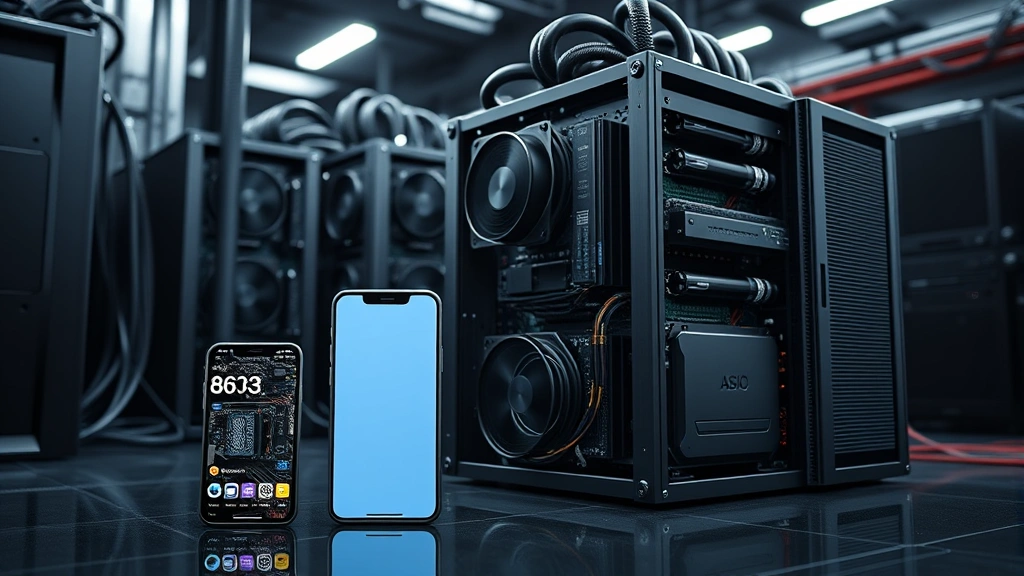
Bitcoin mining has evolved dramatically since the cryptocurrency’s inception. What once could be done on personal computers now requires specialized hardware called ASICs (Application-Specific Integrated Circuits) to remain competitive. Android devices, while powerful, are fundamentally designed for different purposes and lack the specialized architecture needed for efficient Bitcoin mining. Understanding these limitations is crucial before investing time or resources into mobile mining.
How Bitcoin Mining Actually Works
To understand why Android mining is problematic, you first need to grasp the fundamentals of Bitcoin mining. Bitcoin mining is the process by which new bitcoins are created and transactions are verified on the blockchain. Miners compete to solve complex mathematical puzzles, and the first to solve a puzzle gets to add a new block to the blockchain and receives a block reward plus transaction fees.
The difficulty of these puzzles adjusts every 2,016 blocks (approximately two weeks) to maintain an average block time of 10 minutes. As more miners join the network, the difficulty increases proportionally. This means that mining profitability is directly tied to your hardware’s computational power relative to the global hash rate.
Currently, the global Bitcoin network hash rate exceeds 600 exahashes per second (EH/s). To put this in perspective, a modern smartphone’s processing power is measured in gigahashes per second (GH/s)—roughly one million times less powerful than the network average. This enormous gap makes individual Android mining virtually impossible without specialized hardware.
Understanding Bitcoin solo mining versus pool mining is essential. Solo mining means you keep all rewards but face virtually impossible odds on mobile hardware. Pool mining combines computational resources with other miners, but even in pools, an Android device contributes so little that rewards would be negligible.
Android Mining Apps: What They Claim vs Reality
The Google Play Store and various third-party app stores feature numerous Bitcoin mining applications. These apps promise easy earnings, minimal effort, and impressive returns. However, most of these claims are misleading or outright false. Let’s examine what these apps actually do versus what they advertise.
Most Android mining apps fall into several categories. Some attempt legitimate mining but with such minimal efficiency that you’ll earn fractions of a cent per day. Others are cloud mining scams that take your investment and disappear. Still others are designed primarily to generate ad revenue or collect user data, with mining being a secondary feature.
The apps that do attempt actual mining typically use your device’s CPU (central processing unit) to perform hash calculations. However, CPUs are designed for diverse computational tasks, not the repetitive calculations required for Bitcoin mining. Modern ASICs are millions of times more efficient at this specific task because they’re built exclusively for it. An Android CPU mining Bitcoin is like using a hammer to drill a hole—technically possible, but absurdly inefficient.
Legitimate mining pools like Slush Pool and F2Pool have stated that mobile mining devices are not profitable participants. The electricity consumed exceeds the value of bitcoins earned. Some apps claim to use “cloud mining” resources, meaning they connect you to remote mining operations. However, these services typically charge fees that eliminate any potential profit.
Technical Limitations of Android Devices
Several technical factors make Android devices unsuitable for Bitcoin mining. Understanding these limitations helps explain why smartphone mining will never be competitive with specialized hardware.
Processing Architecture: Android devices use general-purpose processors (typically ARM-based chips) designed to balance performance across various applications. Bitcoin mining requires sustained, repetitive hash calculations—something ASICs handle with dedicated silicon. Modern flagship phones might have processors rated at 2-3 GHz, but they’re executing diverse instruction sets. An ASIC operates at similar frequencies but executes only SHA-256 hashing operations, achieving orders of magnitude greater efficiency.
Thermal Constraints: Smartphones have strict thermal limitations. Running your phone at maximum computational capacity continuously generates excessive heat. Most phones throttle performance automatically when temperature exceeds safe limits, reducing mining efficiency further. Additionally, sustained high temperatures degrade battery health and can damage internal components. Miners report that phones running mining apps experience significantly reduced lifespan.
Battery Degradation: Mining drains batteries rapidly and causes accelerated degradation. A smartphone battery is rated for a certain number of charge cycles. Continuous high-load mining can reduce your device’s useful lifespan from several years to months. The cost of replacing batteries and devices far exceeds any mining income.
Power Efficiency: Modern ASICs achieve power efficiency of 50-80 joules per terahash. High-end smartphones might achieve 10,000+ joules per terahash. This means you’re spending enormous amounts of electricity for minimal hash output. Even if electricity is free, the wear on your device makes mining uneconomical.
Memory and Storage Constraints: Some mining algorithms require significant RAM. While modern phones have 8-12GB of RAM, this is already allocated to the operating system and other applications. Mining apps must compete for resources, reducing efficiency further.
Popular Android Mining Applications Reviewed
Let’s examine some apps that have been promoted for Android Bitcoin mining:
MinerGate Mobile Miner: This app allows CPU and GPU mining on Android devices. Users report extremely low earnings—typically less than $0.01 per month on flagship devices. The app is legitimate but economically pointless. MinerGate’s own transparency reports show that mobile mining contributes less than 0.001% of their total mining power.
Crypto Miner: Available on various app stores, this application claims to use your device’s resources for cloud mining. However, reviews consistently show that payouts are minimal or never arrive. Many users report the app simply displays ads while claiming to mine, with no actual cryptocurrency generation occurring.
Bitcoin Miner by Satoshi Labs: This app attempts legitimate mining on Android devices. Honest reviews show that even on high-end phones, monthly earnings are measured in cents. After accounting for battery degradation and electricity costs, the net financial result is negative.
NeoNeonMiner: Marketed as a simple mining solution, this app has received numerous complaints about not paying out promised earnings. Many users suspect it functions more as a data collection tool than a genuine mining application.
The common thread among all these applications is that none achieve profitability when you account for hardware wear, electricity, and time investment. Some legitimate applications exist, but they’re marketed honestly about expected returns—which are essentially zero for individual users.
If you’re interested in understanding how cryptocurrency networks function, exploring Bitcoin encryption mechanisms provides more educational value than attempting mobile mining.
Electricity Costs and Profitability Analysis
Let’s conduct a realistic profitability analysis. Assume you have a flagship Android phone with the best possible processor and you run a mining app 24/7 for one month.
Scenario Parameters: A top-tier smartphone might achieve 50-100 megahashes per second (MH/s) through CPU mining. The current Bitcoin difficulty is approximately 87 trillion. At this difficulty, with 100 MH/s sustained mining, your expected monthly Bitcoin earnings would be approximately 0.00000001 BTC, or about $0.0004 at current prices.
Meanwhile, running your phone at maximum load 24/7 consumes approximately 5-10 watts continuously (beyond normal usage). Over a month, that’s roughly 120-240 kilowatt-hours of additional electricity. At an average US electricity rate of $0.12 per kilowatt-hour, your electricity cost is $14-29 per month.
Even in countries with cheap electricity (like El Salvador at $0.05/kWh), your cost is $6-12 monthly, which vastly exceeds earnings of less than a penny.
Hardware Degradation Costs: Accelerated battery degradation costs you approximately $50-100 in premature replacement. Potential processor damage and reduced device lifespan might cost you hundreds more. These factors make mining economically disastrous.
For perspective on cryptocurrency economics, understanding Bitcoin price prediction trends helps you make informed decisions about where to invest your resources.
Security and Malware Risks
Beyond profitability, Android mining apps present serious security risks. This is perhaps the most important reason to avoid them.
Malware and Data Harvesting: Many apps claiming to offer mining are actually malware designed to steal personal information. These apps request excessive permissions, access your contacts, monitor your location, and intercept your communications. Some variants have been found stealing cryptocurrency wallet information and banking credentials.
Botnet Participation: Some apps don’t actually mine for you—instead, they enlist your device in a botnet controlled by criminals. Your phone becomes part of a distributed attack network used for hacking, spam, or other malicious purposes. You’re liable for network damage caused by your compromised device.
Cryptojacking: Certain apps use your processing power without your knowledge or with misleading permission requests. This hidden mining consumes your electricity and degrades your device while you receive nothing.
Scams and Theft: Many apps are straightforward scams. They collect Bitcoin addresses from users, claim to have mined cryptocurrency, and then disappear when users request payouts. Some variants request upfront payments for “premium mining features” and vanish immediately.
App Store Risks: While Google Play Store has some security screening, many mining apps slip through with misleading descriptions. Third-party app stores have virtually no security measures. Even seemingly legitimate apps have been found containing malware in updates.
To protect yourself, only download apps from official stores, read recent user reviews carefully, check app permissions, and avoid apps requesting unusual access to personal data.
Alternative Ways to Earn Bitcoin on Mobile
If you want to earn cryptocurrency using your smartphone, several legitimate alternatives exist that are more profitable than mining:
Cryptocurrency Earning Apps: Apps like Coinbase Earn, Gemini Earn, and similar platforms offer genuine rewards for learning about cryptocurrencies. You complete educational modules and receive small cryptocurrency amounts. These are legitimate and secure.
Staking Rewards: Several cryptocurrencies offer staking mechanisms where you earn rewards simply by holding coins in compatible wallets. While not Bitcoin-specific, this is far more efficient than mining on mobile hardware.
Cashback and Rewards Programs: Some cryptocurrency exchanges and payment processors offer cashback rewards when you use their services. Over time, these accumulate faster than mining would.
Freelance Work and Gig Economy: Using your phone’s connectivity for remote work, gig platforms, or freelancing generates far more income per hour than any mining app. You could earn $50-200 monthly doing legitimate work, compared to $0.0004 from mining.
Trading and Investment: Rather than mining, small cryptocurrency investments can appreciate over time. Understanding Bitcoin cycle patterns helps you time investments better. However, trading carries risks and requires research.
Referral Programs: Many cryptocurrency platforms offer referral rewards. Referring friends to exchanges or services generates genuine income without hardware wear or electricity costs.
For broader context on market conditions affecting cryptocurrency value, learning about bear market vs bull market dynamics helps you make better financial decisions.
If you’re interested in acquiring Bitcoin through means other than mining, how to buy Bitcoin anonymously discusses various acquisition methods with their respective advantages and considerations.
FAQ
Can any Android phone mine Bitcoin?
Technically, any Android phone with a processor can run mining software. However, “can” and “should” are different questions. All phones can mine, but none can do so profitably. The electricity costs exceed earnings on every device.
What’s the best Bitcoin mining app for Android?
There is no “best” app because no app generates positive returns. If forced to recommend, legitimate pools like Slush Pool have Android interfaces, but earnings remain negligible. Focus instead on the alternative earning methods discussed above.
How much can I earn mining Bitcoin on my phone?
Realistically, you’ll earn less than $1 per year on even flagship devices, after accounting for electricity costs. Many users earn nothing or negative returns after hardware degradation costs.
Is Android Bitcoin mining a scam?
Not all apps are intentional scams, but the economics make them pointless. Most fall into two categories: apps that don’t actually mine (scams), and apps that do mine but at such low efficiency that you lose money. Avoid both types.
What about cloud mining apps?
Cloud mining apps connect you to remote mining operations. Legitimate ones charge fees that eliminate profitability. Illegitimate ones are scams. Neither option is worthwhile.
Will mining damage my phone?
Yes. Sustained high-load mining generates excessive heat, causing thermal throttling, battery degradation, and potential processor damage. Your device’s lifespan decreases significantly.
What’s a better way to earn cryptocurrency on mobile?
Cryptocurrency earning apps, staking programs, cashback rewards, and legitimate freelance work all generate more income than mining with zero hardware damage.
Can I mine other cryptocurrencies on Android?
Some altcoins use less computationally intensive algorithms, making mobile mining theoretically more viable. However, profitability remains poor. Most mobile-mineable coins have collapsed in value or are outright scams.
What external references can verify this information?
Check CoinDesk for current Bitcoin mining difficulty and network statistics. Blockchain Explorer shows actual mining operations and hash rates. Major exchanges like Coinbase provide educational resources on mining economics. Research organizations like Glassnode publish detailed mining analysis. The SEC provides warnings about cryptocurrency scams.


